


K.P. Hanina, Professor – «Genetics of Human Cancer»
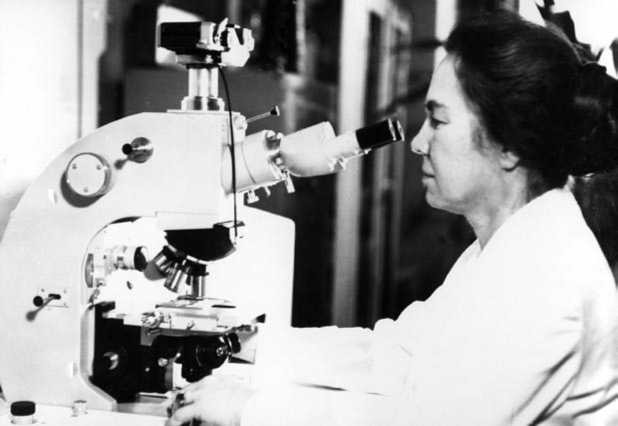
Kaleria Pavlivna Hanina. Honored Worker of Science and Technology of Ukraine, Laureate of the O.O. Bogomolets Award, Doctor of Medical Sciences, Professor
K.P. Hanina was born on May 20, 1926 in Gorky (Russia) into a worker’s family.
Since childhood, Kaleria Pavlivna dreamed of becoming a doctor, and in 1944 her dream came true – she entered the Moscow Medical Institute, from which she graduated with honors in 1949.
Already in her student years, Kaleria Pavlivna made her choice, deciding to devote her further medical career to pathological anatomy. That is why, after graduating from the medical institute, she entered postgraduate studies in the specialty «pathological anatomy».
In 1953, Kaleria Pavlivna defended her candidate dissertation and remained to work at the Department of Pathological Anatomy of the medical institute, where well-known pathologists taught at that time – Professor Yu.M. Lozovskyi, Professor B.I. Mihunov and Professor B.P. Uhriumov, who played an important role in shaping her scientific concepts and directions.
In 1958, K.P. Hanina moved to Kyiv and from 1960 worked at the newly established Kyiv Research Institute of Experimental and Clinical Oncology of the Ministry of Health of the Ukrainian SSR, whose director was the well-known pathophysiologist Academician R.E. Kavetsky.
From 1964, K.P. Hanina was a Doctor of Medical Sciences and head of the Laboratory of Histocytochemistry, and from 1971 – Head of the Department of Tumor Cytogenetics. In 1966 she was awarded the academic title of Professor.
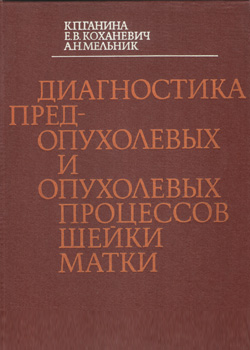
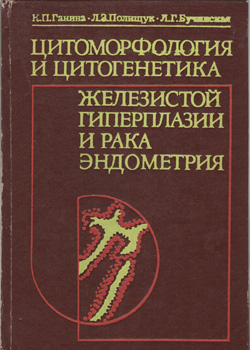
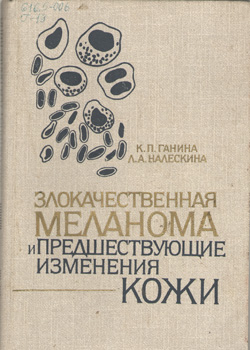
From the very beginning of her work, K.P. Hanina defined for herself and passed on to her students a number of fundamental principles that became decisive in all subsequent years. First of all, these were close cooperation with clinicians and bringing scientific results as close as possible to the needs of practical oncology, and adherence to the postulate of the unity of structure and function in cells, organs and tissues.
Her constant desire to use modern technologies in research made it possible to objectify the data obtained and to introduce them into the oncology clinic.
Kaleria Pavlivna was an innovator in science. She was one of the first in Ukraine to use the methodological approaches of genetics to solve pressing problems of the diagnosis, therapy and prognosis of malignant neoplasms. Thanks to this, a new scientific direction was formed in the 1970s – the cytogenetic diagnosis of precancerous and tumor processes, which became the basis for the creation of the Ukrainian school of «cancer genetics».
As a result of many years of research on tumors (malignant melanoma, cancer of the stomach, breast, cervix and corpus uteri), K.P. Hanina and her students established that cytogenetic indicators are highly informative and that their changes precede the phenotypic manifestations of malignant growth. This proved the fundamental possibility of using cytogenetic indicators for the differential and refining diagnosis of precancerous and tumor processes of various genesis.
The monograph by K.P. Hanina «Cytogenetic Diagnosis in Oncomorphology» (1980) is devoted to the applied aspects of this research.
The correctness of the chosen direction of research is confirmed by the modern requirements for the pathologist – the integration of morphological data with the results of molecular biological studies of tumors (4th EACR – OECI Joint Training Course «Molecular Pathology Approach to cancer», Netherlands, 2014).
Evidence of the recognition of oncogenetics as one of the important scientific directions in oncology was the successful holding in Ukraine of scientific-practical conferences with the participation of a large number of researchers from oncological institutions of the Soviet Union. The first conference devoted to topical problems related to the study of the role of genetic factors in the emergence and progression of malignant neoplasms was held in Ternopil in 1974. It was then, on the initiative of Professors I.T. Shevchenko and K.P. Hanina, that the foundation of a new direction of medical genetics – oncogenetics – was laid. The term itself owes its appearance to the initiators of this conference. In 1983, a conference on oncogenetics was held in Poltava. In the years of independent Ukraine, such conferences were held in 1999 and 2002 (both in Kyiv).
In parallel with the study of cytogenetic changes in tumors and precancerous conditions, K.P. Hanina and her students studied cytological and cytogenetic changes in somatic non-malignant cells outside the primary tumor. The data obtained by 1976 allowed K.P. Hanina, together with Academician R.E. Kavetsky, to formulate the concept of the cytological reactivity of the tumor-bearing organism, which became a new direction of scientific research in oncology. The comprehensive developments on this problem carried out by the staff of the department under the leadership of K.P. Hanina were summarized in the collective monograph «Cytological Reactivity of the Cancer Patient» (1995).
In the last years of her life, the scientific interests of K.P. Hanina were focused on studying the role of genetic factors in the emergence of malignant neoplasms. She also worked on developing a new direction in oncology, «Cancer Genetics and the Environment». It was in this period (the 1990s) that the Cabinet of Ministers of Ukraine approved the State Scientific and Technical Program «Preservation of the
Gene Pool of the Population of Ukraine», within which K.P. Hanina headed the project «Study of Hereditary Predisposition to Oncological Diseases and Hemoblastoses».
Kaleria Pavlivna’s idea of creating in Ukraine a permanent scientific program aimed at studying changes in the genome of tumor and somatic non-malignant cells during the emergence and development of the tumor process was brought to life. In 2006, the departments of the Institute completed the 5-year program of the NAS of Ukraine «Features of the Functioning of the Oncogenome», on which they had worked since 2002. Its logical continuation was the program entitled «Molecular Mechanisms of Growth and Progression of Malignant Neoplasms» (2007-2011).
Turning to the creative legacy of K.P. Hanina, one can state that she had a wide range of scientific interests. Kaleria Pavlivna is the author of more than 400 scientific works, including 11 monographs and chapters in six collective monographs. K.P. Hanina was a WHO expert on the histological classification of testicular tumors. Under her supervision, 12 doctoral and 26 candidate dissertations were completed and defended. K.P. Hanina was a member of three qualification councils for the defense of doctoral and candidate dissertations, and a member of the editorial boards of the journals «Cytology and Genetics» and «Bukovinian Medical Herald».
From 1977 to 1992 she was Chairman of the Kyiv City and Regional Societies of Pathologists, Deputy Chairman of the Republican Society of Pathologists, and a member of the board of the All-Union Society of Pathologists. In 1986, K.P. Hanina was awarded the honorary title of Honored Worker of Science and Technology of Ukraine.
In 1995 she was awarded the O.O. Bogomolets Award of the NAS of Ukraine.
Kaleria Pavlivna was a person of integrity: composed, energetic, purposeful, persistent and boundlessly devoted to the cause to which she dedicated her whole life. Providing consultative diagnostic assistance was a sacred duty of a physician for her. She spared neither effort nor time for it.
Serving science was the meaning of Kaleria Pavlivna’s whole life. Being an extraordinary personality and a wonderful person, she left a bright trace on earth and earned a good memory of herself.
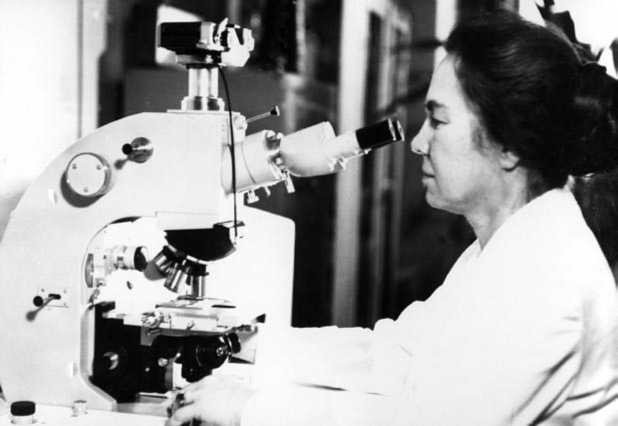
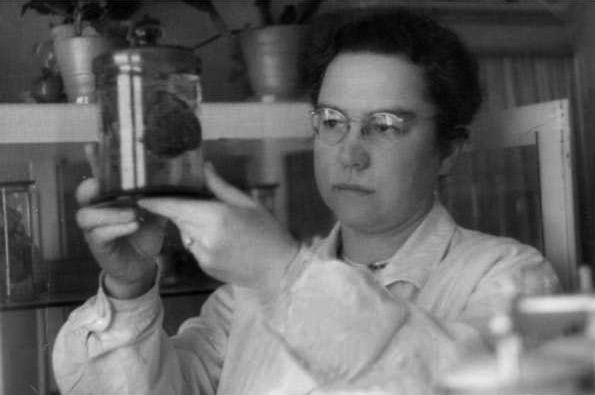
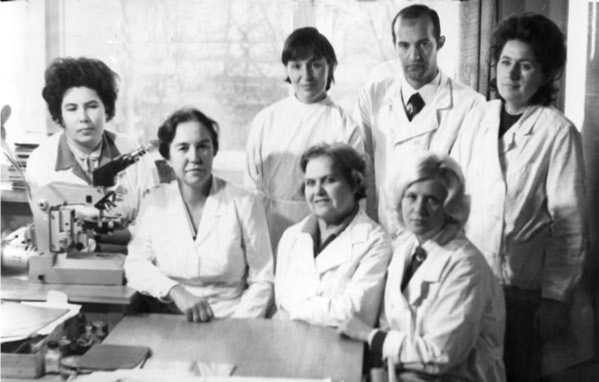
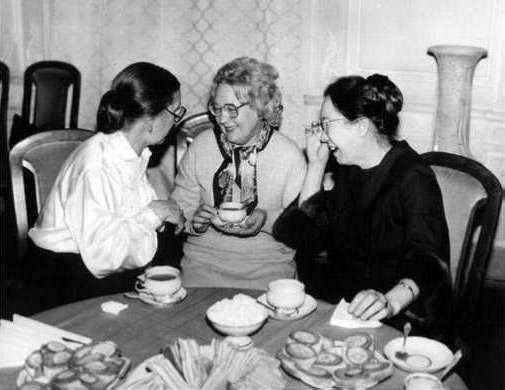
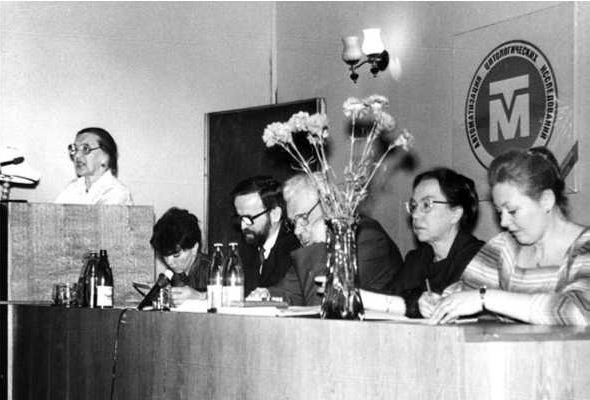
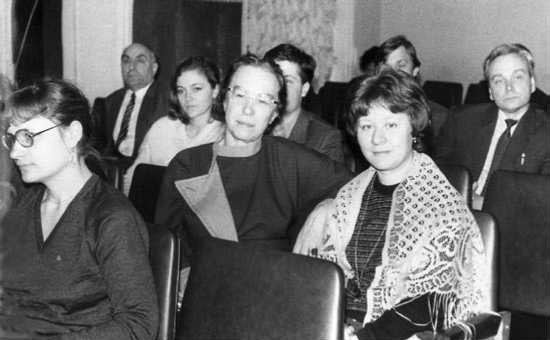
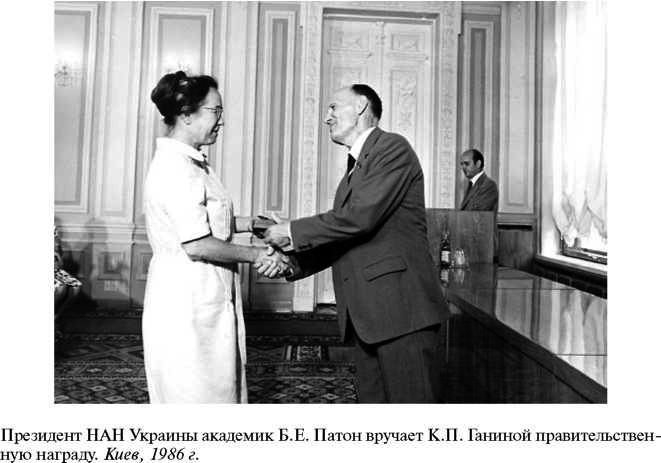
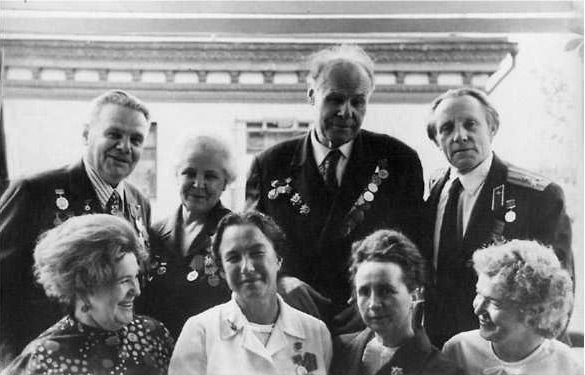
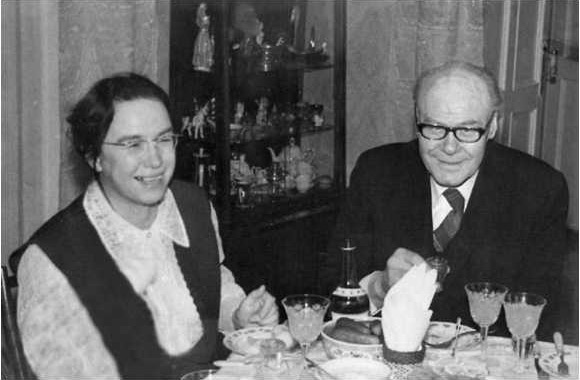
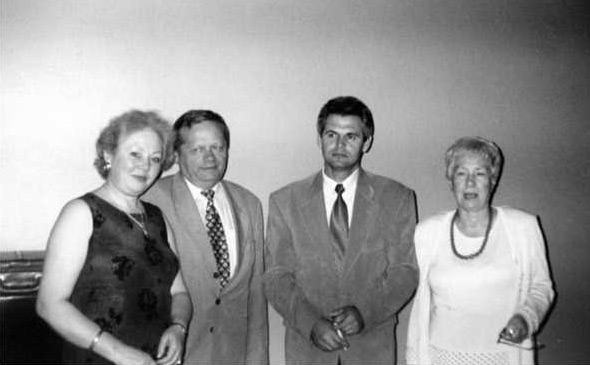
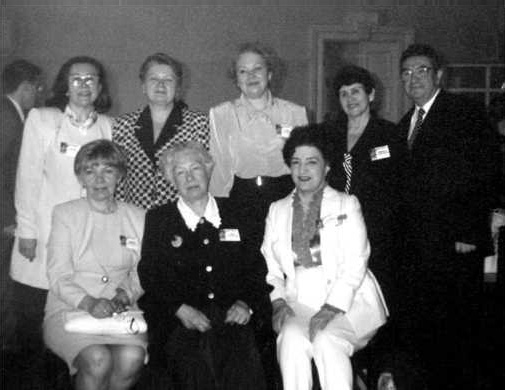
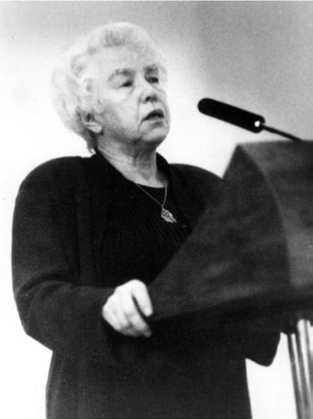
Photo captions:
- Kaleria Pavlivna Hanina. Honored Worker of Science and Technology of Ukraine, Laureate of the O.O. Bogomolets Award, Doctor of Medical Sciences, Professor
- Head of the Laboratory of Histocytochemistry K. P. Hanina examines one of the exhibits of her archive of unique macropreparations of human organs and tissues. Kyiv, 1964.
- K.P. Hanina with staff members in her office. Seated: PhD (Med.) L.Z. Polishchuk, K.P. Hanina, A.K. Derhunova, S.S. Kirieieva; standing: PhD (Med.) L.A. Nalieskina, V.Ye. Ishchenko, L.B. Yablonska. Kyiv, 1983.
- During a break between sessions of the 2nd All-Union Conference on the Automation of Cytological Research: from left, Prof. A.S. Petrova, Academician of the NAS of Ukraine Z.O. Butenko, K.P. Hanina. Kyiv, 1983.
- Presidium of the 2nd All-Union Conference on the Automation of Cytological Research: PhD (Med.) N.V. Borodai, PhD (Tech.) V.L. Isakov, Academician of the NAS of Ukraine V.G. Pinchuk, K.P. Hanina, PhD (Med.) L.M. Isakova; speaker – Prof. A.S. Petrova. Kyiv, 1983.
- K.P. Hanina with colleagues from Novosibirsk and Georgia – PhD (Biol.) N. Yasakova (right) and Prof. R.A. Habuniia (behind, left) in the conference hall at the All-Union Conference «Structure and Function of the Cell Nucleus». Kyiv, 1987.
- President of the NAS of Ukraine B.E. Paton presents a government award to K.P. Hanina. Kyiv, 1986.
- Veterans of the Great Patriotic War K.P. Hanina and Prof. I.T. Shevchenko among friends, war veterans
- K.P. Hanina with her husband Prof. I.T. Shevchenko at home, at a festive table
- K.P. Hanina with the Director of the R.E. Kavetsky IEPOR of the NAS of Ukraine, Academician of the NAS of Ukraine V.F. Chekhun, and colleagues – D.Sci. (Med.) L.M. Isakova and Prof. V.R. Baryliak. Kyiv, 1999.
- 2nd Congress of Oncologists of the CIS Countries, section of oncogynecology: first row – Prof. L.I. Vorobiova, K.P. Hanina, Prof. Ye.V. Kokhanevych; second row – PhD (Med.) I.M. Ivanova, PhD (Med.) Zh.K. Horbunova, D.Sci. (Med.) L.M. Isakova, Prof. Ye.Ye. Vyshnevska, PhD (Med.) Yu.S. Dotsenko. Kyiv, 2000.
- The last presentation of K.P. Hanina at a conference