


R.E. Kavetsky, Academician – «School of Experimental Oncologists»
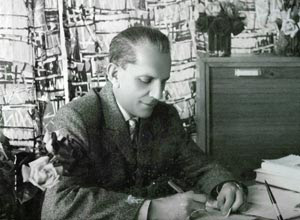
Every great and creative person always leaves to his students a legacy of his talent, knowledge, ideas and kindness. Rostyslav Yevhenovych Kavetsky was exactly such a personality. He was born on December 1, 1899 in Samara and, following the example of his father Yevhen Leopoldovych, a physician by profession, after graduating from the gymnasium he became a student of the medical faculty of Samara University, whose rector at that time was none other than Professor Ye.L. Kavetsky.
In 1925, Rostyslav Yevhenovych entered postgraduate studies at the 2nd Moscow State University (later the 2nd Moscow Medical Institute) at the Department of Pathological Physiology, headed by one of the outstanding national pathophysiologists, O.O. Bogomolets. Rostyslav Yevhenovych was always proud of belonging to the scientific school of O.O. Bogomolets. It is therefore not surprising that R. Kavetsky dedicated his first scientific works to his father, Dr. Ye.L. Kavetsky, and to O.O. Bogomolets. In turn, works with dedicatory inscriptions by O.O. Bogomolets appeared on the young scientist’s bookshelf.
At the turn of the thirties, Academician O.O. Bogomolets was elected President of the Academy of Sciences of the Ukrainian SSR. On his initiative, the Institute of Experimental Biology and Pathology of the People’s Commissariat of Health of the Ukrainian SSR was established in Ukraine, and in 1931 he moved from Moscow to Kyiv with a group of students, among whom was R.E. Kavetsky. From that time on, the whole life and scientific activity of Rostyslav Yevhenovych were connected with Ukraine.
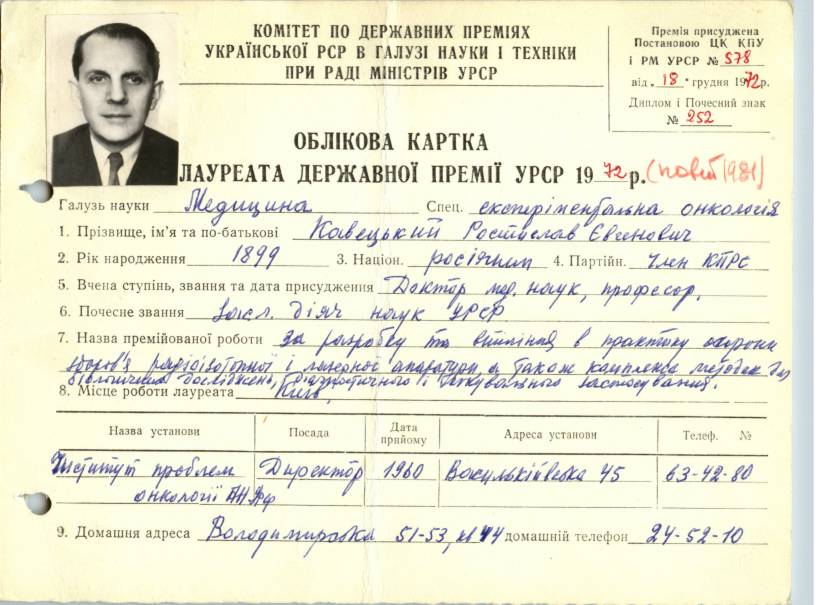
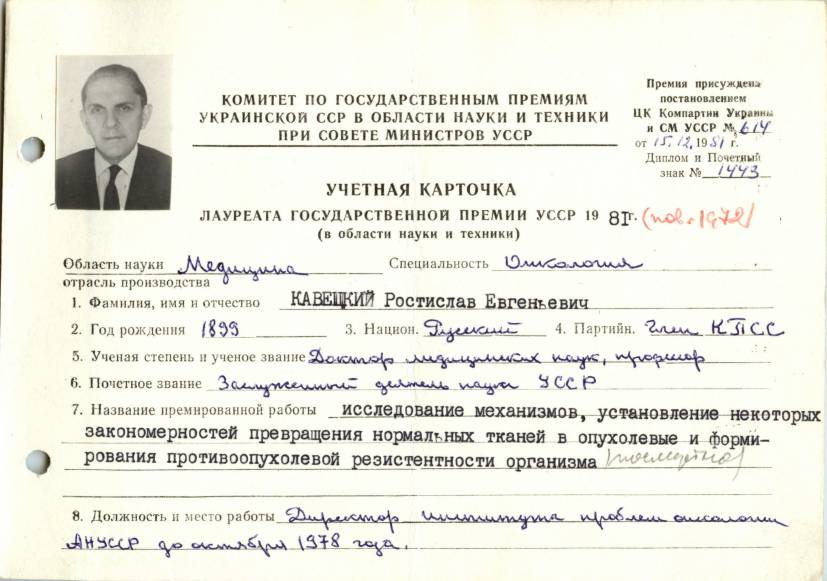
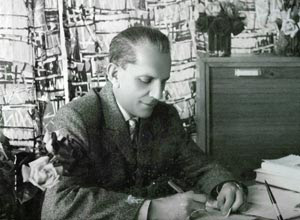
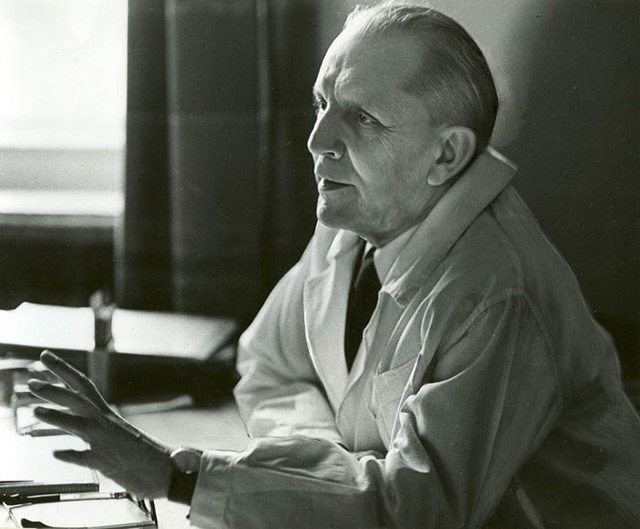
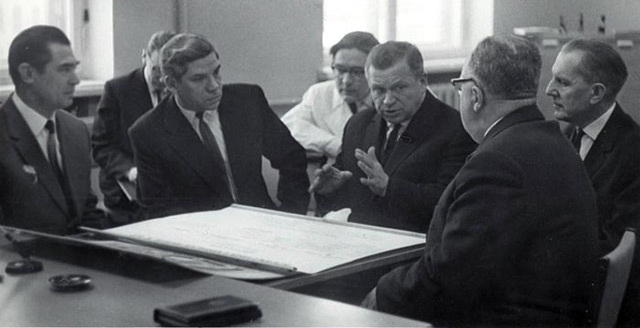
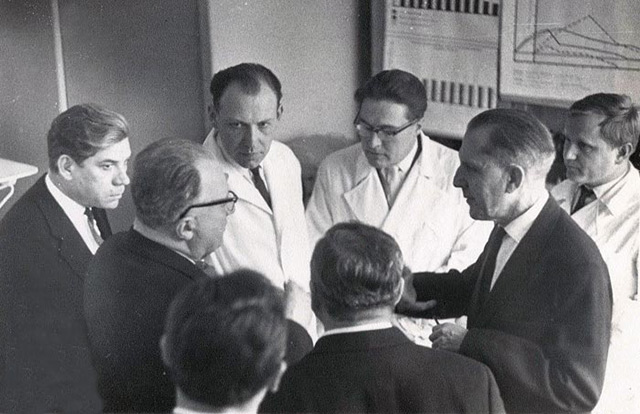
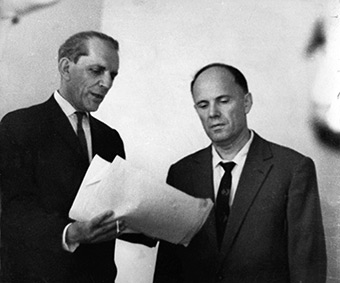
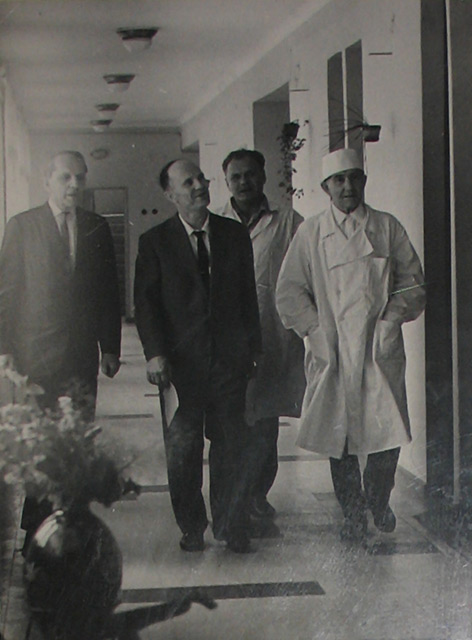
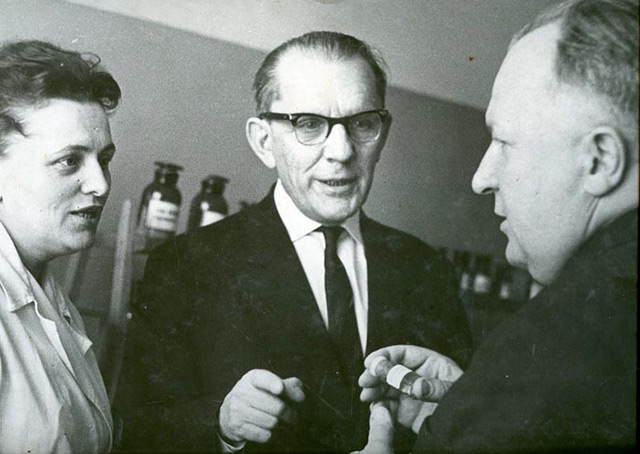
The scientific interests of the young scientist increasingly concentrated on one of the most important problems of medicine – the study of the nature and causes of the tumor process, the mechanisms of blastomogenesis, and the role of the organism, in particular its defense reactions, in cell transformation. It was such research that became the basis for developing methods of adequate treatment and determining ways of preventing tumors. The scientist devoted his whole life to solving these problems.
In 1933, R.E. Kavetsky received the degree of Candidate, in 1937 – Doctor of Medical Sciences, and two years later – the title of Professor. An important and, to a large extent, concluding stage of the pre-war period of R.E. Kavetsky’s scientific activity was the monograph «The Role of the Active Mesenchyme in the Disposition of the Organism to Malignant Neoplasms», in which numerous facts confirmed the concept of Academician O.O. Bogomolets, according to which the emergence and development of malignant neoplasms are possible only against the background of suppression of the defense reactions of the connective tissue system of the organism.
Based on the work of O.O. Bogomolets, R.E. Kavetsky was the first to propose antireticular cytotoxic serum (ACS) for the treatment of cancer patients. Positive results were obtained, but the outbreak of the Great Patriotic War interrupted this work. However, ACS found wide application in military hospitals, where its introduction contributed to the rapid recovery of many patients.
In 1942, R.E. Kavetsky volunteered for the front, where he served as a senior inspector of the front-line evacuation center of the Southwestern and Stalingrad Fronts. He was awarded the Order of the Red Star and medals.
In 1944, after the liberation of Kyiv from the German invaders and his demobilization from the army, R.E. Kavetsky returned to Kyiv. From 1944 he worked as Deputy Director, and from 1946 to 1952 – as Director of the Institute of Clinical Physiology of the Academy of Sciences of the Ukrainian SSR.
From 1953 to 1960 – Head of the Laboratory of Compensatory and Defense Functions of the Organism of the O.O. Bogomolets Institute of Physiology of the Academy of Sciences of the Ukrainian SSR.
In 1945, R.E. Kavetsky was elected a Corresponding Member, and in 1951 – a Full Member of the Academy of Sciences of the Ukrainian SSR; in 1952 he became a member of the Presidium of the Academy of Sciences of the Ukrainian SSR and Chairman of the Bureau of the Department of Biological Sciences of the Academy of Sciences of the Ukrainian SSR.
In the post-war period, R.E. Kavetsky together with his students comprehensively studied the role of the nervous system in the tumor process and its interaction with other systems of the organism. These studies resulted in the first monograph in the national and world literature «The Tumor Process and the Nervous System» (1958), which was translated into English and published in the USA.
Rostyslav Yevhenovych caringly and with great attention advised and supervised the scientific work of researchers who dealt with issues of experimental oncology at various research institutions.
When the need to intensify fundamental research in oncology in Ukraine became obvious, on the initiative of R.E. Kavetsky the Ukrainian Research Institute of Experimental and Clinical Oncology of the Ministry of Health of the Ukrainian SSR was established in Kyiv in 1960 (now the R.E. Kavetsky Institute of Experimental Pathology, Oncology and Radiobiology of the NAS of Ukraine; director – Academician of the NAS of Ukraine Vasyl Fedorovych Chekhun). From the moment the Institute was founded until the end of his life, R.E. Kavetsky headed the institution and became the leading ideologist of research in experimental oncology in Ukraine. His passion for science, deep erudition and personal charm allowed Rostyslav Yevhenovych to unite a large team of like-minded people around the most complex problem of biology and medicine.
At the Institute, under the leadership of R.E. Kavetsky, the Ukrainian school of experimental oncologists was formed. The key direction of research became the study of the mechanisms of interaction between the organism and the tumor, the assessment of immune, metabolic and hormonal features, as well as the role of the nervous system in this interaction, the priority in the development of which rightfully belongs to R.E. Kavetsky.
These studies resulted in the fundamental monograph by R.E. Kavetsky «Tumor and Organism», published in 1962, which received international recognition. In 1964, the author was awarded the O.O. Bogomolets Prize for this book.
Studies of humoral and cellular reactions of antitumor immunity made it possible to identify characteristic features of the immune response of the organism during the induction of tumors by chemical carcinogens and oncogenic viruses. It was established that antitumor humoral reactions can not only suppress the proliferation of transformed cells, but also stimulate the development of tumors.
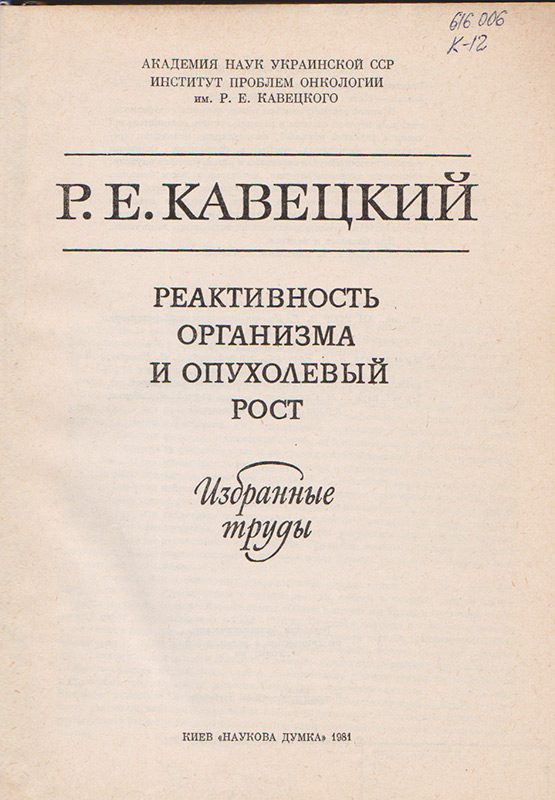
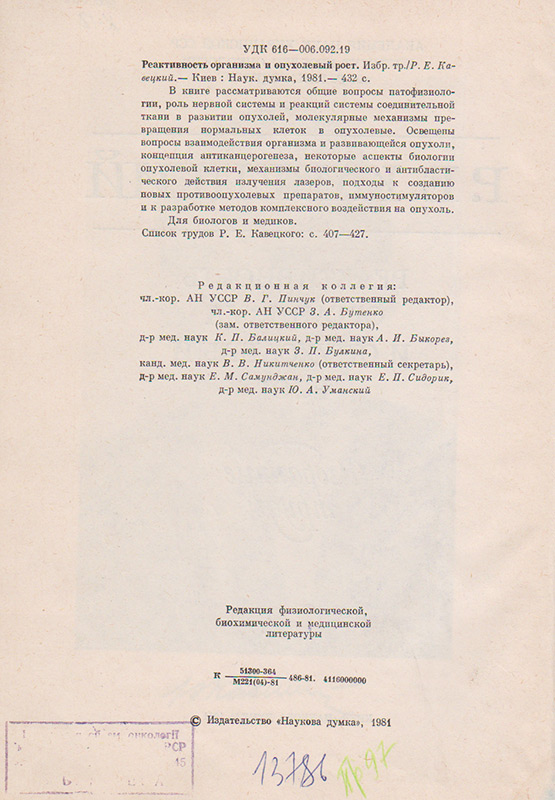
Fundamental were the studies aimed at assessing the role of the endocrine system in the development of neoplasms, as a result of which it was established that the nature and degree of hormonal imbalance in the organism largely determine the biological features of tumors. The data obtained became the theoretical basis for developing agents with targeted action on the neuroendocrine system for the prevention of neoplasms and for antitumor therapy. The results of these studies were summarized by R.E. Kavetsky in the monograph «Interaction of the Organism and the Tumor» (1977).
In our time, the problem of the interaction of the tumor and the organism has been confirmed, rethought and further developed. The view of the tumor as a local process has been replaced by the concept of a disease of the whole organism, which is also reflected in the approach to the treatment of cancer patients. This is largely the merit of R.E. Kavetsky and his school. This is yet another proof of the correctness of the scientific foresight of the scientist, who went from an idea to an experiment, and then – to practice.
R.E. Kavetsky was a generator of new ideas, sensing promising directions in modern science. The Institute began to study the molecular mechanisms of leukemogenesis and the biophysical aspects of blastomogenesis, and to develop new models of precancerous and tumor processes. In 1968, the first department in Ukraine for the biological and antitumor action of laser radiation was established at the Institute. The experimental developments of this department contributed to the introduction of laser therapy into the clinic. For a series of works on this problem, R.E. Kavetsky and his colleagues received the State Prize of the Ukrainian SSR in Science and Technology in 1972.
At the end of the 1970s, on the initiative of R.E. Kavetsky, the Institute began to study methods of sorption blood purification. With his active participation, samples of fundamentally new hemosorbents were created, which had the unique ability to remove toxic products of various molecular weights from the blood and which found wide application in clinical practice. R.E. Kavetsky initiated research on nonspecific protective and regulatory mechanisms in carcinogenesis. Evidence was obtained of the participation of factors of the hemostasis system in the formation of the antitumor resistance of the organism at such stages as tissue malignization, engraftment of circulating tumor cells, and the formation and growth of neoplasms.
For the first time in an experiment, the effect of endogenous interferon on the process of chemical carcinogenesis and tumor metastasis was revealed, and the influence of certain psychotropic drugs on the therapeutic effect of cytostatics, on the immune response of the organism, and on side effects in chemotherapy of malignant tumors was established.
In the scientific research conducted by Rostyslav Yevhenovych in the last years of his life (1972-1978), the central place was occupied by the problem of anticarcinogenesis. He substantiated the theoretical possibility of acting on individual links of carcinogenesis, either in order to stop the process of transformation of a normal cell into a tumor cell, or to influence the primary tumor rudiment in order to prevent tumor progression. With these works, the scientist proved the reversibility of carcinogenesis and the ability of the tumor cell to dedifferentiate.
The concept of anticarcinogenesis still attracts the attention of many scientists in the world today. The name of Rostyslav Yevhenovych Kavetsky is widely known abroad. He repeatedly represented national science at international congresses, conferences and symposia.
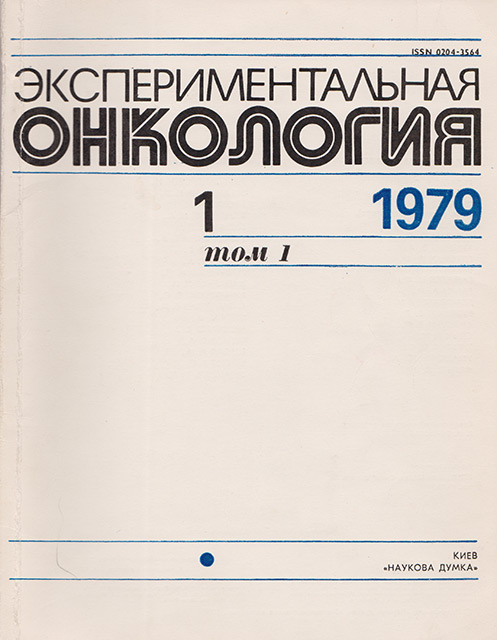
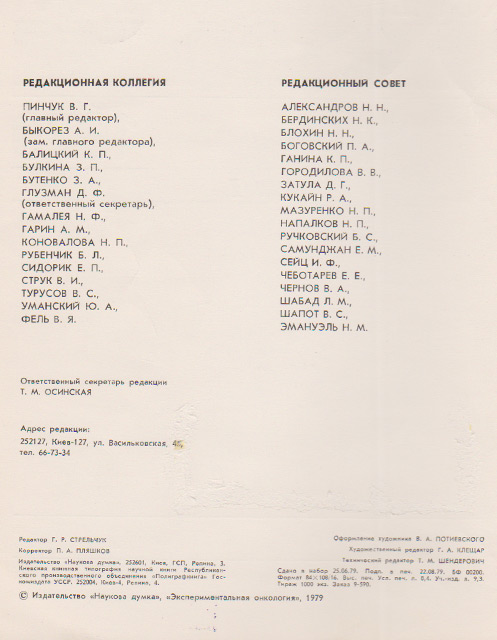
It was his idea to found the journal «Experimental Oncology» (now the international journal «Experimental Oncology») – a fundamentally new scientific publication that was to promote the exchange of hypotheses and research results and give impetus to closer cooperation of scientists at the All-Union level. R.E. Kavetsky managed not only to lay the foundations for the creation of the journal and to invite world-renowned scientists to cooperate, among whom were N.M. Emanuel, G.I. Abelev, B.D. Brondz, V.S. Shapot, M.O. Raushenbakh, O.I. Ahieienko and others, but also to become the editor of its first and (partially) second issues. However, the scientist was not destined to see the journal published – the process of its publication was established only at the beginning of 1979.
R.E. Kavetsky died on October 12, 1978.
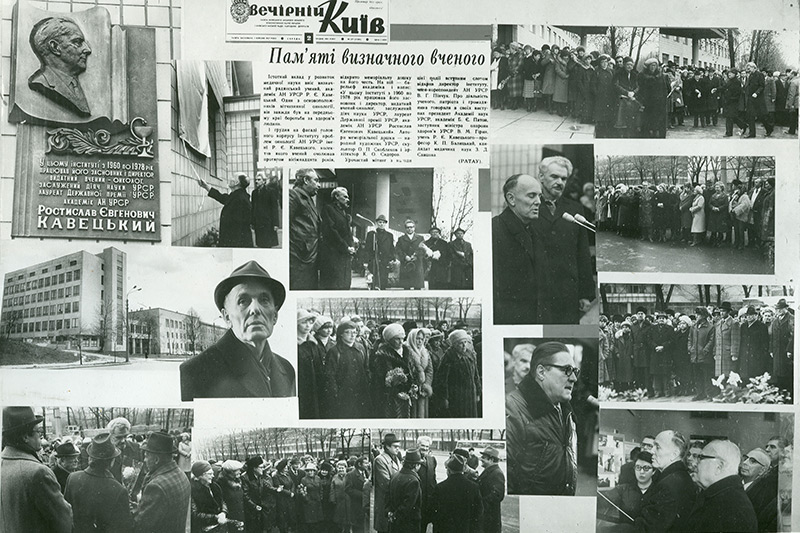
In 1979, the Institute of Oncology Problems of the Academy of Sciences of the Ukrainian SSR was named after R.E. Kavetsky.
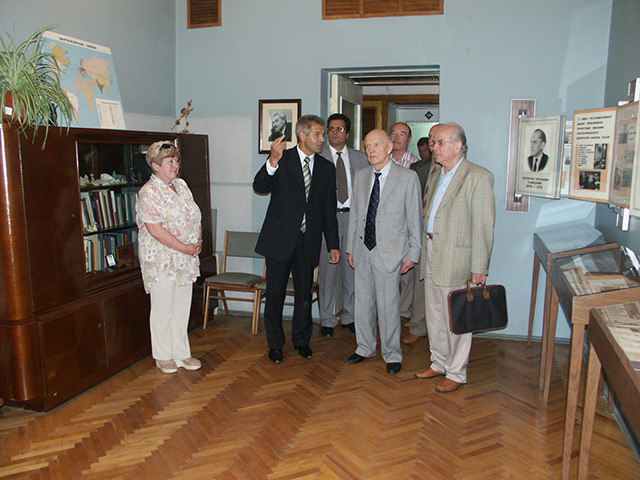
On December 1, 1979, the day when R.E. Kavetsky would have turned 80, a memorial museum was opened and a memorial plaque was installed to honor the memory of the scientist.
Rostyslav Yevhenovych Kavetsky left a great creative legacy. He authored more than 600 scientific works, including 17 monographs, relating to various areas of theoretical and experimental oncology. They are characterized by the originality and depth of the ideas put forward, by their scope and bold practical orientation, that is, by a close connection between the results of fundamental research and the needs of clinical oncology.
For the study of the mechanisms and the establishment of certain regularities of the transformation of a normal cell into a malignant one and of the formation of antitumor resistance, R.E. Kavetsky (posthumously) and a group of his students were awarded the State Prize of the Ukrainian SSR in Science and Technology (1981).
In 1960, Academician R.E. Kavetsky was awarded the title of «Honored Worker of Science of the Ukrainian SSR»; he was awarded two Orders of Lenin (1954, 1969), the Order of the October Revolution (1974), and two Orders of the Red Banner of Labor (1961, 1966).
R.E. Kavetsky was a man of inexhaustible creative energy; his remarkable talent as a scientist and organizer was combined with deep integrity, heartfelt warmth, goodwill and constant readiness to be helpful. Breadth of views on the human personality with all its individual features was inherent in R.E. Kavetsky. He was distinguished by the high inner culture characteristic of the national intelligentsia, and his deep analytical mind and devotion to scientific duty allowed Rostyslav Yevhenovych to become one of the luminaries and creators of national medicine and experimental oncology.
The memory of this talented man still illuminates the scientific path of the Institute of Experimental Pathology, Oncology and Radiobiology of the NAS of Ukraine, where the presence of the Teacher is always felt in deeds and affairs, and where people always remember and are proud of belonging to the school of Academician Rostyslav Yevhenovych Kavetsky.